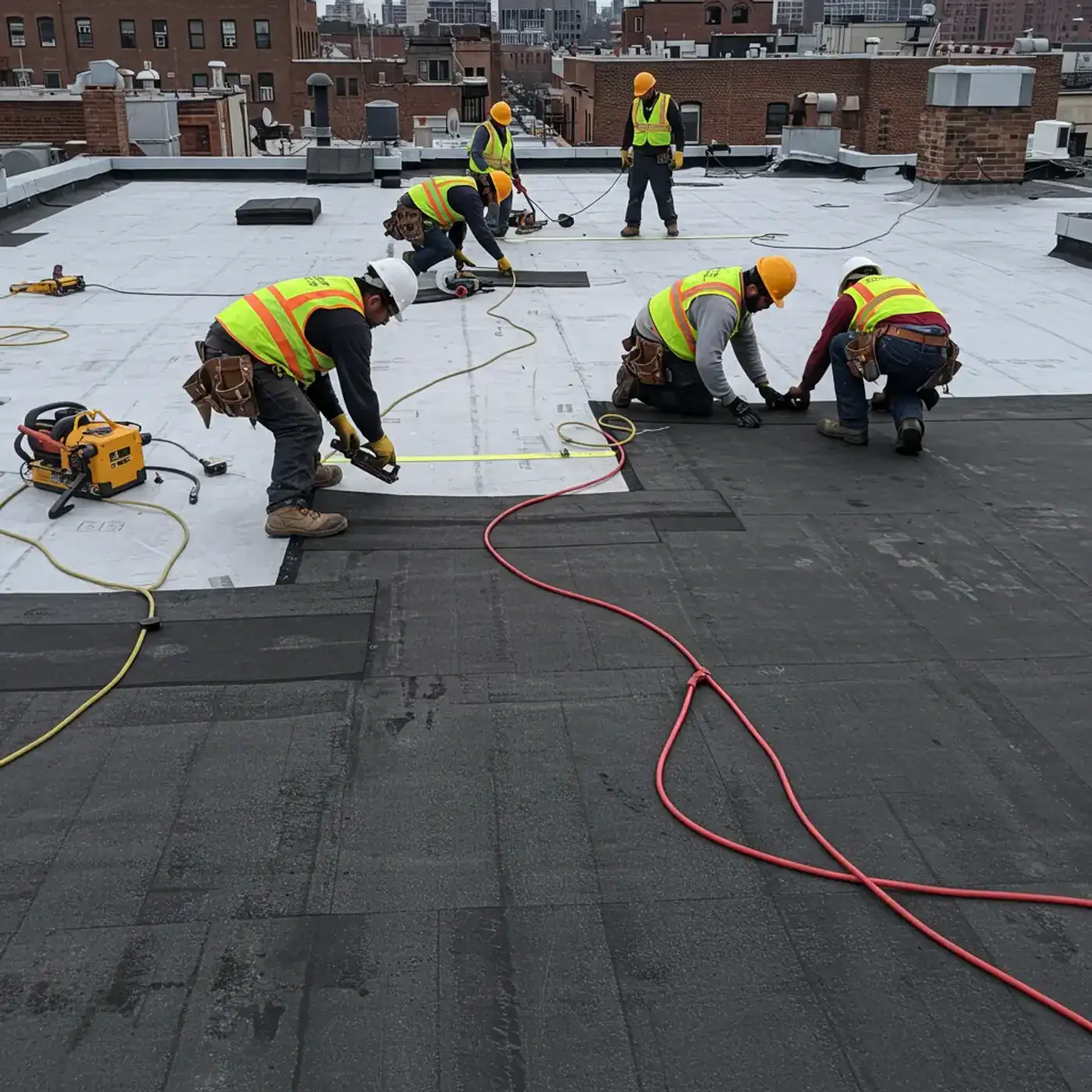


Check your roof in spring (winter damage, gutters, flashing), summer (attic ventilation, heat damage, flat-roof ponding), fall (clean gutters, trim branches, schedule an inspection) and winter (ice dams, snow load, ceiling stains). Have a professional inspect pitched roofs once a year and flat roofs twice a year, plus after major storms.
Key takeaways
- Spring: look for winter damage and clear gutters.
- Summer: check attic ventilation and flat-roof drainage.
- Fall: clean gutters, trim trees, book an inspection before winter.
- Winter: watch for ice dams and ceiling stains after storms.
In this guide
Spring: recover from winter
Winter is the hardest season on roofs. Once it warms up:
- Look from the ground for missing, cracked or lifted shingles
- Check flashing around chimneys, vents and skylights
- Clear gutters and downspouts of winter debris
- Look in the attic for damp spots, stains or daylight
- On flat roofs, look for ponding, blisters and open seams
- Book an inspection if anything looks off. Spring is the ideal time.
Summer: heat and storms
- Make sure attic ventilation is working; trapped heat ages shingles faster
- Watch for curling or blistering shingles on sun-exposed slopes
- Check that flat roof drains are clear before summer thunderstorms
- After storms, look for debris and branch damage
- Schedule repairs and replacements while the weather is reliable
Fall: prepare for winter
- Clean gutters after leaves drop, the most important fall job
- Trim branches that hang over or touch the roof
- Seal small gaps around flashing and vents before freeze-thaw season
- Check attic insulation, which helps prevent ice dams
- Get a pre-winter inspection, especially for flat roofs and older roofs
Winter: watch and react
- Watch for ice dams along the roof edge
- After heavy snow, look for sagging and stains on top-floor ceilings
- Don't climb on an icy roof; use a roof rake from the ground if safe
- After nor'easters, check for wind damage and call a roofer for anything you find
Staten Island-specific risks
Coastal wind. Homes along the South and East Shore take the brunt of nor'easters, so wind-rated shingles and well-fastened edges matter.
Trees. Older neighborhoods have mature trees that fill gutters and drop branches.
Freeze-thaw cycles. Water that gets into small cracks expands when it freezes, widening them every winter.
When to call a professional
Call a roofer if you see missing shingles, water stains, sagging, or damaged flashing, or simply if it's been more than a year since your roof was inspected. We offer roof inspections with photos across Staten Island, plus 24/7 emergency repair after storms. More tips in roof repair in NYC: what homeowners need to know.
Frequently asked questions
When is the best time to replace a roof on Staten Island?
Late spring through early fall offers the most reliable weather, but roofs can be replaced much of the year. Booking in the off-season can make scheduling easier.
How often should I clean my gutters?
At least twice a year, in late spring and late fall, and more often if trees overhang your roof.
What are ice dams?
Ridges of ice at the roof edge that form when heat from the house melts snow, which refreezes at the cold eaves. Water backs up behind the ice and can leak under shingles. Good attic insulation, ventilation and ice and water underlayment prevent them.
Should I get my roof checked after a nor'easter?
Yes, especially on the South and East Shore. Look from the ground for missing shingles or debris, check the attic for damp spots, and call a roofer if you see anything.