

Repair a flat roof when it's under about 15 years old, the problem is in one area, and the membrane is still flexible. Most flat roof leak repairs in NYC cost $400–$1,200. Replace it when it's 20+ years old, the insulation is wet over large areas, or leaks keep returning. Replacement costs about $8–$14 per sq ft.
Key takeaways
- Flat roof repairs usually cost $400–$1,200; replacement about $8–$14 per sq ft.
- Age, wet insulation and repeat leaks are the three deciding factors.
- Ponding water is a symptom: fix the drainage, not just the leak.
- Twice-yearly inspections are the cheapest way to make a flat roof last.
In this guide
Signs your flat roof needs attention
- Ponding water still there 48 hours after rain
- Blisters or bubbles in the membrane
- Cracks, splits or alligatoring on the surface
- Lifted seams or membrane pulling away from walls
- Damaged flashing at parapets, curbs and vents
- Stains on top-floor ceilings, especially near walls
- Soft spots when you walk on it
When a repair is the right call
A repair is usually right when:
- The roof is under about 15 years old
- The problem is localized: one seam, one parapet, one drain, one puncture
- The membrane around it is still flexible and intact
- The insulation underneath is dry
Typical NYC flat roof repairs cost $400–$1,200; flashing work runs $450–$900. Larger storm or deck repairs can reach $1,500–$3,500. Before any repair, the real cause should be found. Ponding water, for example, is usually a drainage problem, and patching the membrane without fixing the drain just buys time.
When it's time to replace
Replacement usually saves money when:
- The roof is 20+ years old
- Insulation is wet over large areas (wet insulation doesn't dry out under a membrane)
- Leaks keep returning in new places
- There are widespread blisters, splits or shrinkage
- There are already two or more layers of old roofing
- You're about to add solar, a roof deck or HVAC that would need to come off later
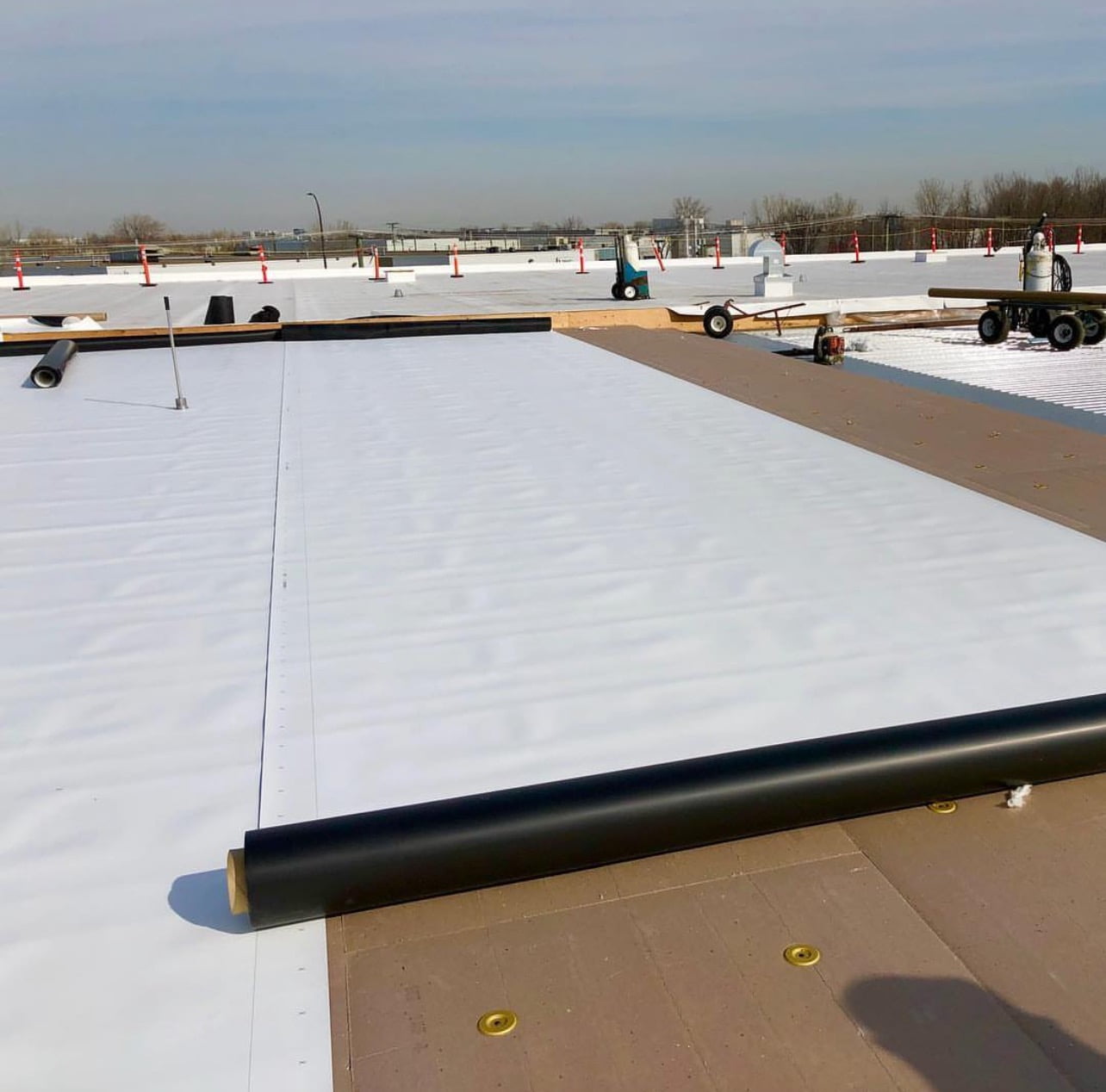
Replacement typically costs about $8–$14 per sq ft: EPDM $8–$12, modified bitumen $9–$13, TPO $9–$14, PVC $10–$16. A 1,000 sq ft roof runs about $8,000–$13,000 on Staten Island and $10,000–$17,000 in Brooklyn. See the Brooklyn roof cost guide.
Choosing a system for your new flat roof
- EPDM: most affordable, flexible in the cold, common on row homes
- TPO: white and reflective, heat-welded seams, meets cool-roof rules. Read our TPO guide.
- Modified bitumen: toughest under foot traffic
- PVC: best for restaurants and chemical exposure
What makes NYC flat roofs fail early
Most early flat roof failures we see come from the same few things: water that can't drain (clogged drains, sagging decks, layers of old roofing creating low spots), flashing details done poorly at parapets and equipment, and years without an inspection. Fixing drainage during a replacement, with tapered insulation or crickets, is often the single biggest thing you can do to make a new roof last.
Get an honest answer
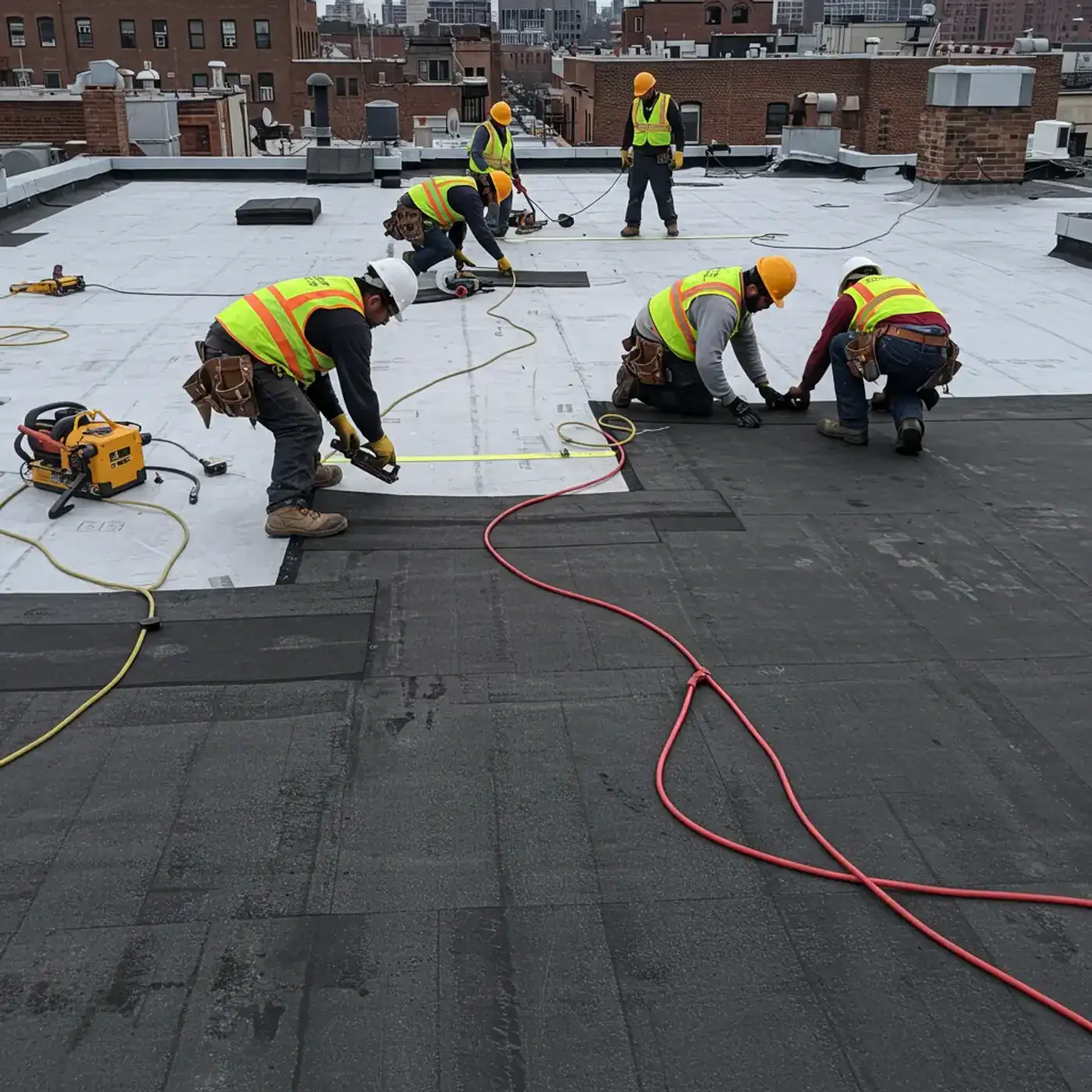
We repair and replace flat roofs across Staten Island, Brooklyn, Manhattan and Queens. We'll inspect your roof for free, show you photos and tell you straight whether it needs a patch or a new roof. See flat roofing or Brooklyn flat roofing.
Frequently asked questions
How long should a flat roof last in NYC?
EPDM, TPO and modified bitumen typically last 20–30 years and PVC 25–35 years with proper installation and maintenance. Ponding water and skipped maintenance shorten that.
Can you patch a flat roof?
Yes. Seams, punctures and small damaged areas can be patched with compatible material. Patches last when the surrounding membrane is still healthy; on an old, brittle roof they often just move the leak.
How do I know if the insulation under my flat roof is wet?
Soft or spongy spots underfoot, blisters, and leaks that appear far from any visible damage are signs. A roofer can confirm by opening a small test area during an inspection.
Is it cheaper to recover a flat roof instead of tearing it off?
A recover over a single dry layer can save on tear-off costs, but if the insulation is wet or there are already multiple layers, a tear-off is required and is the better long-term investment.